Subscribe to receive the latest posts

Each morning when we wake up, we can choose how we’ll begin our day. For example, let’s consider two scenarios.
Scenario 1: The alarm goes off. You reach for your phone and start scrolling through text messages, emails, and social media. More time goes by while you catch up on the news. Then you get up, your mind occupied by your to-do list. The day has just begun, but you already feel weighed down as you rush to get going.
Scenario 2: You hear the alarm go off and say, “Lord Jesus, I love You.” You get out of bed and spend time fellowshipping with the Lord in prayer and reading His Word. Refreshed and spiritually nourished, you feel strengthened for the day ahead.
We’d probably all prefer the second scenario. In this post, we’ll discuss how beginning each day with the Lord Jesus brings invaluable benefits to our spiritual life and mention some pointers for developing this habit.
[[Free Study Bible]]
If we want to have a relationship with someone, it’s essential to spend time with them. There’s no substitute for face-to-face quality time. This is even more true of our relationship with the Lord Jesus. He’s a wonderful person who lives in us and who wants us to know Him in a personal way. Spending time in His presence is irreplaceable. It’s during such times that we can fellowship with Him and begin to know Him on a deeper level.
The Bible assures us that when we turn our hearts to the Lord, we will behold Him with an unveiled face—that is, with nothing between us.
Second Corinthians 3:16-18 says:
“But whenever their heart turns to the Lord, the veil is taken away. And the Lord is the Spirit; and where the Spirit of the Lord is, there is freedom. But we all with unveiled face, beholding and reflecting like a mirror the glory of the Lord, are being transformed into the same image from glory to glory, even as from the Lord Spirit.”
The Lord today is so near; as the Spirit, He’s dwelling in our spirit. When our hearts turn to Him, all veils are removed and we can behold Him face to face in our spirit. As we speak to the Lord in prayer and let Him speak to us, He imparts more of Himself into us.
We certainly can, and should, contact the Lord in our spirit throughout the day. Any time we spend with Him is valuable.
But the best time of day for us to spend uninterrupted time with the Lord is in the morning, before our hearts and minds are occupied by so many other things. We’ve probably noticed how opportunities to be alone with Jesus seem to dwindle as the day goes on. Before we know it, the day’s over, and we’re exhausted.
Rather than rushing to get going, we can enjoy intimate fellowship with the Lord Jesus in the freshness of a new day. While everything is still quiet, we can open our hearts to Him to behold His beauty, fellowship with Him, speak to Him, and enjoy Him in His Word. By spending this undisturbed time with our dear Lord Jesus, we enter more and more into an affectionate, personal relationship with Him.
Having this time in the morning also helps set the direction and tone for the rest of our day. We can’t underestimate the value of beholding the Lord first thing in the morning.
Many verses throughout the Bible speak of meeting with God in the morning. Here are just a few from the Old Testament:
Psalm 5:3: “O Jehovah, in the morning You will hear my voice; in the morning I will set forth my words in order to You, and I will watch.”
Isaiah 26:9: “My soul desires You in the night; indeed my spirit within me seeks You at the dawn; for when Your judgments are in the earth, the inhabitants of the world learn righteousness.”
Isaiah 50:4: “The Lord Jehovah has given me the tongue of the instructed, that I should know how to sustain the weary with a word. He awakens me morning by morning; He awakens my ear to hear as an instructed one.”
And in the New Testament, the Lord Jesus Himself is our example:
Mark 1:35: “And rising very early in the morning, while it was still night, He [Jesus] went out and went away to a deserted place, and there He prayed.”
Spending time with the Lord first thing in the morning takes more than fleeting inspiration. We have to make an effort and even establish it as a habit, which takes practice and perseverance. We may not succeed every day, but eventually, it will become a regular part of our lives that we can’t live without.
Let’s look at some practical pointers for establishing this healthy spiritual habit.
1. Ask the Lord for help. Since the Lord wants to have a relationship with us, surely He’ll answer our prayers about this matter. We can pray, “Lord Jesus, I really want to start my day with You. Supply me with the grace each morning to put everything else aside so I can be with You first.”
2. Don’t stay up too late. Going to sleep late makes it hard to be with the Lord before we have to get on with our day. Making a small change of going to sleep even 20 or 30 minutes earlier will help us get up earlier so we can be with the Lord in the morning.
3. Don’t be discouraged by failure. We should remember that building up a lifelong habit takes practice. If we fail, being hard on ourselves doesn’t help. Instead, we can simply start again the next morning. The Bible tells us in Lamentations 3:23 that the Lord’s compassions are new every morning. We just need to take it one day at a time.
4. Start small and be consistent. When developing a new habit, it’s easy to bite off more than we can chew. We can be inspired and promise ourselves that we’ll dedicate an hour to the Lord every morning. But we probably won’t be able to keep that up for very long, especially if we’ve never done it before. It’s better to begin with something small, maybe just 10 minutes, and build up from there. You can find what works for you, but the main thing is to be consistent.
5. Try using a printed copy of the Bible. The best way to avoid all the distractions on our phones is to put them away during our time with the Lord. You can try using a printed copy of the Bible instead of reading it on your phone. This makes it easier to focus on the Lord and His Word and avoid the temptation to check messages, emails, or other notifications.
May the Lord help us all to view each morning as a precious opportunity to enjoy Him and delight ourselves in Him.
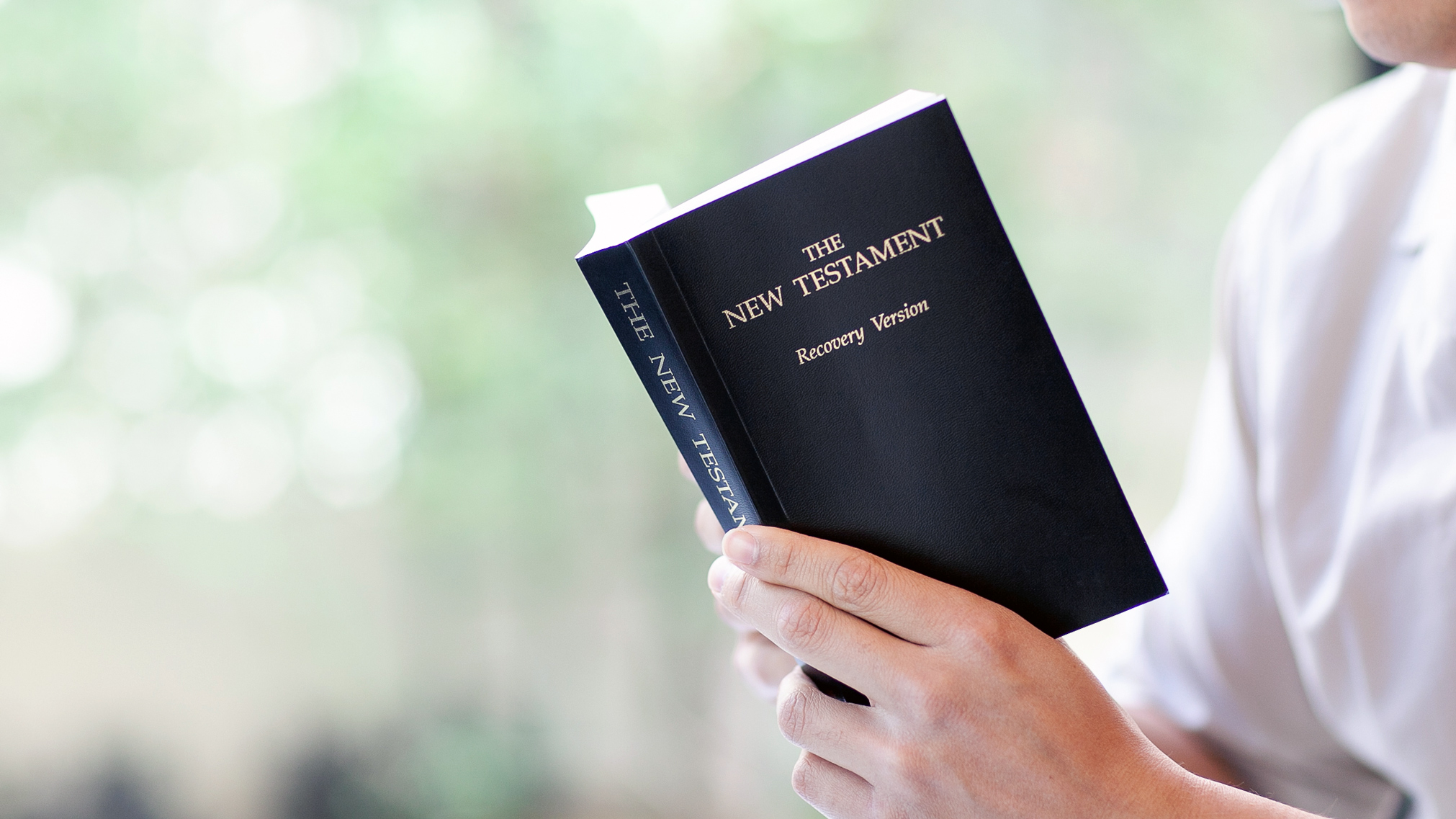
If you live in the US, you can order a free copy of the New Testament Recovery Version here to use in your time with the Lord.

We all carry burdens in our human life. Things like financial difficulties, troublesome work environments, painful family situations, and health concerns can make us feel physically worn out and inwardly exhausted. As we struggle to bear these burdens, we may wonder where we can find real, lasting relief and rest.
In Matthew 11:28-29, the Lord Jesus sounded a call:
“Come to Me all who toil and are burdened, and I will give you rest. Take My yoke upon you and learn from Me, for I am meek and lowly in heart, and you will find rest for your souls.”
In this post, we’ll take a closer look at this precious promise from Jesus with help from notes in the New Testament Recovery Version.
We might think that unless our circumstances change or all our problems disappear, having rest is impossible. But the rest the Lord promises isn’t dependent on our circumstances. And it’s much more than the rest we might experience by simply being less busy. We’ve probably experienced feeling full of turmoil and unrest even when we’re on a vacation. Even though our environment and circumstances are different, inwardly we still may not have true rest.
In His promise to us, the Lord Jesus didn’t say that He would improve our situation, or that He would give us a problem-free life. Instead, He said that if we come to Him, He will give us rest.
In the New Testament Recovery Version, note 2 on rest in Matthew 11:28 says:
“Rest refers not only to being set free from the toil and burden under the law or religion or under any work or responsibility, but also to perfect peace and full satisfaction.”
Now let’s read note 4 on souls in verse 29:
“The rest that we find by taking the Lord’s yoke and learning from Him is for our souls. It is an inward rest; it is not anything merely outward in nature.”
Because the rest the Lord gives us is inward in nature, we can experience it even in the midst of a difficult environment. In any situation, when we come to the Lord, He gives us inward rest for our very souls. This is how we experience perfect peace and full satisfaction.
In fact, this rest is not an objective thing the Lord Jesus gives us that’s separate from Himself. He Himself is our real rest. He came to live in us to be everything to us for our experience and enjoyment.
When the Lord Jesus was physically living on earth, to come to Him meant you had to be in the same place He was at the same time. If He went to Galilee, the only way to come to Him was to also travel to Galilee.
But for us today, this isn’t the case. The Lord Jesus passed through death and resurrection, and 2 Corinthians 3:17 tells us that now in resurrection, “the Lord is the Spirit.”
As the Spirit, He entered into our human spirit, our deepest part, when we first believed in Him. This is why 2 Timothy 4:22 says, “The Lord be with your spirit.”
These two verses show us that now the Lord as the Spirit dwells in our human spirit.
Since He’s in our spirit, for us to come to the Lord is to come to our spirit. And we can do this at any time, in any place, under any circumstances. When we come to Him in our spirit, we find rest for our souls.
So how do we come to the Lord in our spirit? Here are four ways we can practice coming to Him:
1. Call on His name—this is the simplest way to come to the Lord. At any moment, we can cry out, “Oh, Lord Jesus! Lord Jesus, I need You! Oh, Lord Jesus!” Even whispering His name brings us to Him, releases us from our burdens, and fills us with Christ as our real rest.
2. Speak to Him in prayer—when we pray to the Lord, we don’t have to compose long, formal prayers. Instead, we can simply talk to Him. We can pour out our hearts to Him and tell Him all about our situation. In this way, we can practice what 1 Peter 5:7 tells us to do: “Casting all your anxiety on Him because it matters to Him concerning you.”
3. Pray over His Word—as we read the Bible, we can pray with the Word of God. For example, we can pray with the verses in Matthew 11 like this: “Oh Lord, I come to You right now. Lord Jesus, I’m toiling and burdened by so many things. Lord, be my rest right now.”
4. Sing to the Lord—this is such an enjoyable way to come to Him! We can often find rest for our souls as we sing hymns to the Lord. For instance, here are some verses from a hymn by Witness Lee:
I come to Thee, dear Lord, My heart doth thirst for Thee; Of Thee I’d eat, of Thee I’d drink, Enjoy Thee thoroughly.
In such a fellowship Thou, Lord, art grace to me; My heart and spirit gladdened, filled, I enter rest in Thee.
To hear the tune and read all the lyrics, click here.
Whenever we feel full of turmoil and weighed down by burdens, we simply need to come to the Lord in order to find rest for our souls. Then, even in the midst of busy, difficult days, we’ll experience Him as perfect peace and full satisfaction.
If you live in the US, you can order a free copy of the New Testament Recovery Version here.
In another post, we saw that our God has a plan, an eternal purpose, which includes our salvation. Being saved from God’s eternal judgment by believing in Jesus is a marvelous matter, but God’s plan of salvation involves even more than that.
In fact, when the apostle Paul wrote of salvation in Romans 5:10, he used the phrase much more:
“For if we, being enemies, were reconciled to God through the death of His Son, much more we will be saved in His life, having been reconciled.”
Paul indicated that even after we’re reconciled to God through Jesus’ death, there’s still much more. In this post, we’ll read verses and notes in the New Testament Recovery Version to help us understand the meaning of this verse.
Romans 5:10 mentions two matters: being reconciled to God and being saved in His life. We might think being reconciled to God is enough, so why does Paul also say we will be saved in the life of Christ?
To answer this question, we need to go back to God’s creation of humanity. The Bible tells us that from the beginning, God wanted to be joined with and dwell in mankind. God and man would share the divine life, and man would express God. This is God’s purpose for humanity.
After creating Adam and Eve, God placed them in a beautiful garden. In this garden were two main trees: the tree of life, representing the divine life of God, and the tree of the knowledge of good and evil, representing Satan, God’s enemy. God wanted Adam and Eve to eat from the tree of life to receive His life. He also commanded them not to eat of the tree of the knowledge of good and evil. But through Satan’s subtle temptation, they disobeyed God and ate of that tree.
The consequences of man's fall in the garden of Eden immediately resulted in a twofold problem. And since Adam represented the entire human race, we all inherited this problem.
What is this twofold problem we inherited from Adam?
First, all mankind came under God’s condemnation. God is righteous. Although God loved Adam, His righteousness required Him to judge Adam’s sin of disobedience. And through Adam, all of mankind was condemned by God, separated from Him, and became His enemies.
Romans 3:10 says:
“Even as it is written, ‘There is none righteous, not even one.’”
And Romans 3:23 says:
“All have sinned and fall short of the glory of God.”
Second, mankind was poisoned with the evil nature of the devil. Romans 5:19 says:
“Through the disobedience of one man the many were constituted sinners.”
What does the phrase constituted sinners mean?
The first paragraph of note 1 in this verse in the New Testament Recovery Version explains:
“Whether we are sinners or are righteous depends not on our actions but on our inward constitution. Through his fall Adam received an element that was not created by God. This was the satanic nature, which became the constituting essence and main element of fallen man. It is this constituting essence and element that constituted all men sinners. We are not sinners because we sin; we sin because we are sinners. Whether we do good or evil, in Adam we have been constituted sinners. This is due to our inward element, not our outward actions.”
Due to Adam’s fall, all mankind have been constituted sinners. This constitution is the source of all the problems and evil acts today. Instead of receiving God’s life and expressing Him, fallen human beings reject God and express the satanic nature. But God would never give up on His original plan and purpose for man! So He provided a twofold solution to our twofold problem, which is revealed in Romans 5:10.
[[Free Study Bible]]
Let’s reread Romans 5:10:
“For if we, being enemies, were reconciled to God through the death of His Son, much more we will be saved in His life, having been reconciled.”
In the New Testament Recovery Version, note 2 on much more explains:
“Verse 10 of this chapter points out that God’s full salvation revealed in this book consists of two sections: one section is the redemption accomplished for us by Christ’s death, and the other section is the saving afforded us by Christ’s life. The first four chapters of this book discourse comprehensively regarding the redemption accomplished by Christ’s death, whereas the last twelve chapters speak in detail concerning the saving afforded by Christ’s life.”
Now let’s examine these two sections of God’s salvation more closely.
We were condemned sinners, but Jesus, the sinless Lamb of God, died on the cross as our Substitute. Because Jesus bore God’s judgment for us and paid the penalty for our sins, God can righteously grant us forgiveness.
Actually, we’re not only forgiven by God, we’re reconciled to Him. Note 1 on reconciled in Romans 5:10 explains:
“Propitiation and forgiveness of sins are adequate for a sinner but not for an enemy. An enemy needs reconciliation, which includes propitiation and forgiveness but goes further, even to resolving the conflict between two parties. Our being reconciled to God is based on Christ’s redemption and was accomplished through God’s justification (3:24; 2 Cor. 5:18-19). Reconciliation is the result of being justified out of faith.”
When we heard the gospel, we were convicted of our sins and of our enmity with God. We repented to God and believed in Jesus Christ as the Savior. As a result, we were forgiven, delivered from God’s righteous judgment, justified, and reconciled to God.
We’re surely thankful that we’ve been reconciled to God, and that we’re no longer under eternal condemnation. This is wonderful for us, but in itself, our being reconciled to God will not fulfill God’s purpose. That’s because of the other problem we inherited from the fall.
If we think honestly about our lives after we’re saved, we have to admit that the effects of being constituted sinners continue to plague us all the time. For example, we’re impatient with others, stubborn, distracted by the world, and so on. So how can we be saved from our sinful constitution?
Note 2 on much more explains what being saved in Christ’s life means:
“Before 5:11, Paul shows us that we are saved because we have been redeemed, justified, and reconciled to God. However, we have not yet been saved to the extent of being sanctified, transformed, and conformed to the image of God’s Son. Redemption, justification, and reconciliation, which are accomplished outside of us by the death of Christ, redeem us objectively; sanctification, transformation, and conformation, which are accomplished within us by the working of Christ’s life, save us subjectively. Objective redemption redeems us positionally from condemnation and eternal punishment; subjective salvation saves us dispositionally from our old man, our self, and our natural life.”
This is part of the gospel, the good news to us. Today, we’re in the process of being saved much more by the life of Christ. Through the inward working of the life of Christ, we’re saved from our old man, our self, and our natural life, which are all related to our fallen constitution. And on the positive side, this inward working sanctifies us, transforms us, and conforms us to the image of Christ. This is what will fulfill God’s original purpose to be expressed through us.
But how are we inwardly saved in the life of Christ?
Note 4 on in His life in Romans 5:10 explains:
“To be saved in Christ’s life is to be saved in Christ Himself as life. He dwells in us, and we are organically one with Him. By the growth of His life in us, we will enjoy His full salvation to the uttermost. Redemption, justification, and reconciliation are for the purpose of bringing us into union with Christ so that He can save us in His life unto glorification (8:30).”
First Corinthians 15:45 tells us that in His resurrection, Christ became the life-giving Spirit. When we believed in Him, He as the Spirit came into our human spirit to be one with us and to dwell in us as our life, just as God originally intended.
The life that saves us is Christ Himself within us. We can overcome self, sin, and the world not by our ineffectual effort, but by Christ’s life. Christ is pure, victorious, holy, and full of virtues. He overcomes any negative thing. The more His life grows in us, the more we’re saved from our temper, selfishness, pride, stubbornness, and a host of other things.
So we need to contact Christ in our spirit to be saved in His life. When we spend personal time with Him every morning, we can confess our sins to Him, fellowship with Him about anything, and pray with His Word. Throughout the day, in every kind of situation, we can call upon the name of the Lord to turn to Him and be saved in His life. Christ will grow in us, and we’ll enjoy His salvation in so many aspects of our daily living. Little by little, His life in us will fully transform us into the image of Christ, fulfilling God’s desire for us to be His expression.
The matter of being saved in the life of Christ is extensive and rich. The New Testament Recovery Version notes on this topic are very enlightening. If you live in the US, you can order a free copy of the New Testament Recovery Version here.