
The terms soul and spirit have been discussed at length in philosophy, literature, and the writings of various religions. They’re sometimes used interchangeably because people believe they’re the same thing.
But what does the Bible say? Are they the same thing? And does knowing if they’re different matter?
In this post, we’ll look at verses and notes in the New Testament Recovery Version to see that the soul is different from the spirit, and how they’re different. We’ll also discuss why knowing they’re different is important in our relationship with God.
Two key verses
First Thessalonians 5:23 says:
“And the God of peace Himself sanctify you wholly, and may your spirit and soul and body be preserved complete, without blame, at the coming of our Lord Jesus Christ.”
This crucial verse reveals we have three parts: a spirit, a soul, and a body. In Greek, the original language of the New Testament, the presence of the conjunction and in the phrase spirit and soul and body indicates they’re three different things. The body is obviously distinct from the soul, and the soul is also distinct from the spirit.
Then Hebrews 4:12 says:
“For the word of God is living and operative and sharper than any two-edged sword, and piercing even to the dividing of soul and spirit and of joints and marrow, and able to discern the thoughts and intentions of the heart.”
The joints and marrow in our physical body are close together, but they can be separated. Likewise, the Word of God can divide our soul and our spirit, showing that they’re different parts.
So we see from the Bible that the spirit and the soul are not the same thing. God’s Word also reveals that the soul and the spirit have different functions related to God’s purpose.
[[Free Study Bible]]
Our soul
In this universe, there are three realms: the physical, the psychological, and the spiritual. God created us with a body that can substantiate the physical realm. But what about our soul?
With our soul, we can substantiate things in the psychological realm. In fact, in Greek, the word translated as soul is psuche, which is the root of the word psychology, the study of the soul.
In the Bible, we can see that our soul is composed of three parts: our mind, our emotion, and our will.
Let’s start by first looking at the mind.
The second part of Psalms 139:14 says:
“Your works are wonderful, and my soul knows it well.”
This verse tells us the soul knows. Other verses indicate that the soul also considers and remembers. Knowing, considering, and remembering are all functions of the mind, showing that the mind is a part of the soul.
Then, many verses throughout the Bible show that the soul loves, hates, feels joy, grieves, and desires.
For instance, Song of Songs 1:7 begins:
“Tell me, you whom my soul loves, Where do you pasture your flock?”
And 2 Samuel 5:8 refers to enemies who were “hated by David’s soul.”
Loving and hating are functions of the emotion. So these and other verses are solid proof that the emotion is a part of the soul.
Finally, Psalms 77:2 says, “My soul refused to be comforted.” And Job 7:15 says, “my soul would choose.”
Choosing, deciding, and refusing are functions of our will, indicating that the will is also a part of our soul.
Our soul has the ability to know, understand, love, hate, choose, and refuse, allowing us to substantiate the psychological realm. Our soul is our very person, and it expresses our personality.
Our spirit
Our body is the outermost part of our being, our soul is inward, and our spirit is the innermost, deepest part of our being.
Our spirit enables us to substantiate the spiritual realm. In particular, it enables us to receive and contact God Himself.
John 3:6 says:
“That which is born of the Spirit is spirit.”
When we believed in the Lord, we were born again of the Spirit, and received Him as the Spirit in our spirit.
Then John 4:24 says:
“God is Spirit, and those who worship Him must worship in spirit and truthfulness.”
God being Spirit means His substance is Spirit, and our spirit corresponds to God. Just as we have to use our ears as the proper organ to substantiate, or experience, sound, we must use our spirit to contact, fellowship with, and worship God.
So our human spirit is the key not only to our regeneration, but to all our spiritual experiences for the rest of our Christian life.
Our spirit and soul in God’s plan
We’ve seen that our spirit is the organ we must use to contact and receive God, and that our soul is the organ for expression.
Through the fall of mankind, our soul was corrupted with Satan’s evil nature. So before we were saved, we could only express ourselves with our fallen human nature that we were born with.
When we were saved, we were born again, and Jesus Christ came to live in our spirit to be the source of our life and our living. And He doesn’t want to remain confined to our spirit. He wants to spread into our soul and even transform us into His image. This is a lifelong process.
Of course, we need to use the faculties of our mind, emotion, and will as we go about our lives. But Jesus Christ wants us to experience and enjoy Him by contacting Him in our spirit. He wants us to live by Him and in oneness with Him. This is why we need to build up the habit of exercising, or using, our spirit every day.
The more we do, the more He has the way to spread into our soul and saturate it with Himself. As a result, more and more, we’ll think as He thinks, feel as He feels, and choose as He chooses. We’ll then express God to those around us, and God’s original plan for us will be accomplished.
Seeing the role of the soul and the spirit in God’s eternal purpose is crucial for our Christian life. We can’t get into all the details here in this post, so we strongly encourage you to download and read The Economy of God by Witness Lee. In this book, Lee goes into detail about the functions of our spirit and our soul with many practical examples that help make matters clear. You can download this eye-opening e-book for free from anywhere in the world here.

The resurrection of Jesus Christ is an essential tenet of our Christian faith. It’s only by the redeeming death of our Savior and His resurrection that we are justified before God and eternally saved.
Romans 4:25 makes this clear:
“Who [Jesus] was delivered for our offenses and was raised for our justification.”
But in addition to this, did you know that the Bible speaks of three wonderful things that happened when Jesus was resurrected from the dead?
In this post, we’ll read verses and helpful notes in the New Testament Recovery Version that reveal these three things. We hope this will give us a broader view of and deeper appreciation for the resurrection of Jesus Christ.
1. The believers were regenerated
Most of us can recount exactly when we received the Lord Jesus and were born again, or regenerated.
While it’s true that each of us was regenerated on a particular date, 1 Peter 1:3 says something extraordinary:
“Blessed be the God and Father of our Lord Jesus Christ, who according to His great mercy has regenerated us unto a living hope through the resurrection of Jesus Christ from the dead.”
This verse tells us that when Jesus was resurrected, we were all regenerated! This is hard for our minds to comprehend, but according to the Word of God, it’s a remarkable fact. The eternal God isn’t bound by time. According to the divine viewpoint, Peter, Paul, and all of Christ’s believers throughout the centuries, including us, were regenerated at the resurrection of Jesus from the dead.
Note 4 on this verse in the Recovery Version explains what regeneration is:
“Regeneration, like redemption and justification, is an aspect of God’s full salvation. Redemption and justification solve our problem with God and reconcile us to God; regeneration enlivens us with God’s life, bringing us into a relationship of life, an organic union, with God. Hence, regeneration issues and results in a living hope. Such regeneration is accomplished through the resurrection of Christ from the dead.”
Romans 4:25 tells us Jesus’ being raised from the dead was for us to be objectively justified before God. But 1 Peter 1:3 reveals more. Through Jesus’ resurrection, we were also inwardly regenerated with the life of God. Since we were enlivened with God’s own life, we now share His life and have a relationship of life with Him. This is what God originally planned for us.
[[Free Study Bible]]
2. Jesus Christ became the firstborn Son of God
Many people are familiar with John 3:16:
“For God so loved the world that He gave His only begotten Son, that everyone who believes into Him would not perish, but would have eternal life.”
God manifested His great love for fallen sinners by giving His only begotten Son. God didn’t spare His beloved Son but sent Him into this world to die for us so that all who believe into Him would not perish, but would have eternal life.
The only begotten Son of God was and is divine. But when He was incarnated to be the man Jesus, He took on human nature. He was divine and human at the same time, God yet man: a God-man. This is the One who died on the cross for us.
Then speaking of Christ’s resurrection, Acts 13:33 says:
“That God has fully fulfilled this promise to us their children in raising up Jesus, as it is also written in the second Psalm, ‘You are My Son; this day have I begotten You.’”
Since Christ was God’s only begotten Son already, even before resurrection, why does this verse say that on the day of resurrection He was begotten of God?
Note 1 on this verse in the New Testament Recovery Version helps us understand:
“Resurrection was a birth to the man Jesus. He was begotten by God in His resurrection to be the firstborn Son of God among many brothers (Rom. 8:29). He was the only begotten Son of God from eternity (John 1:18; 3:16). After incarnation, through resurrection He was begotten by God in His humanity to be God’s firstborn Son.”
The words incarnation and humanity here are key. Christ, who is divine from eternity to eternity, became a man, died as a man, and was raised as a man. Through resurrection, He was begotten in His humanity as God’s firstborn Son.
For Christ to be the firstborn Son of God implies the existence of many other sons. That’s us! We, of course, were born possessing the human life. Through being born again, we obtained the divine life and are now sons of God. Christ is the firstborn Son with divinity and humanity, and we’re His many brothers.
John 20:17 tells us what Jesus said to Mary the Magdalene on the morning of His resurrection:
“Jesus said to her, Do not touch Me, for I have not yet ascended to the Father; but go to My brothers and say to them, I ascend to My Father and your Father, and My God and your God.”
Now let’s read the note on brothers in this verse:
“Previously, the most intimate term the Lord had used in reference to His disciples was ‘friends’ (15:14-15). But after His resurrection He began to call them ‘brothers,’ for through His resurrection His disciples were regenerated (1 Pet. 1:3) with the divine life, which had been released by His life-imparting death, as indicated in 12:24. He was the one grain of wheat that fell into the ground and died and grew up to bring forth many grains for the producing of the one bread, which is His Body (1 Cor. 10:17). He was the Father’s only Son, the Father’s individual expression. Through His death and resurrection the Father’s only Begotten became the Firstborn among many brothers (Rom. 8:29). His many brothers are the many sons of God and are the church (Heb. 2:10-12), a corporate expression of God the Father in the Son. This is God’s ultimate intention. The many brothers are the propagation of the Father’s life and the multiplication of the Son in the divine life. Hence, in the Lord’s resurrection God’s eternal purpose is fulfilled.”
The Lord in resurrection was made God’s firstborn Son and we became the many sons of God, His many brothers!
3. Jesus Christ became a life-giving Spirit
First Corinthians 15:45 says:
“So also it is written, ‘The first man, Adam, became a living soul’; the last Adam became a life-giving Spirit.”
The last Adam in this verse refers to Jesus Christ.
Note 1 on this verse in the Recovery Version sheds tremendous light on the matter of Christ becoming the life-giving Spirit in resurrection. The first part says:
“Through creation Adam became a living soul with a soulish body. Through resurrection Christ became a life-giving Spirit with a spiritual body. Adam as a living soul is natural; Christ as a life-giving Spirit is resurrected. First, in incarnation He became flesh for redemption (John 1:14, 29); then, in resurrection He became a life-giving Spirit for the imparting of life (John 10:10b). Through incarnation He had a soulish body, as Adam had; through resurrection He has a spiritual body. His soulish body has become a spiritual one through resurrection. Now He is a life-giving Spirit in resurrection, with a spiritual body, ready to be received by His believers.”
John 1:14, 1:29, and 10:10b are all referenced in this note, and they say respectively:
“And the Word [Christ] became flesh and tabernacled among us.”“Behold the Lamb of God who takes away the sin of the world!”“I have come that they may have life and may have it abundantly.”
The eternal God became a man of flesh and blood named Jesus Christ to die for us as the Lamb of God. In resurrection, Christ became the life-giving Spirit so He could impart the divine life into us, even abundantly.
When Jesus was living on earth, it was wonderful to be near Him physically. He healed the sick, gave sight to the blind, and spoke words of life no one had ever heard before. But those who followed Him were still separate from Him. He couldn’t enter into them. But in resurrection, He became the life-giving Spirit so He could enter into all His believers.
Today anyone, anywhere who repents and believes in Him as the Savior can receive Him into their spirit, the innermost part of their being.
Now let’s focus on the last part of the note from 1 Corinthians 15:45:
“When we believe into Him, He enters our spirit, and we are joined to Him as the life-giving Spirit. Hence, we become one spirit with Him (6:17). Our spirit is made alive and is resurrected with Him. Eventually, our present soulish body will become a spiritual body in resurrection, just like His (vv. 52-54; Phil. 3:21).”
First Corinthians 6:17, referenced in the note, says:
“But he who is joined to the Lord is one spirit.”
When we believed in the Lord, our regenerated human spirit and the Spirit were joined together as one spirit. No relationship could be more personal or intimate than this. He as the life-giving Spirit now dwells in our spirit and continues to give life to us when we contact Him by praying and calling on His name.
Christ’s resurrection is truly wonderful! We were regenerated with the life of God; He became the firstborn Son of God and we the many sons of God; and He became the life-giving Spirit who now dwells in our spirit.
Praise the Lord for the resurrection of Jesus Christ! May our eyes be opened to see what happened in His resurrection, and may our hearts and mouths be opened to thank and praise Him!
The subject of the resurrection of Jesus Christ is profound. We could only touch on these three wonderful things that happened in His resurrection in a very brief way here. If you live in the United States, we encourage you to order a free New Testament Recovery Version here so you can read all the notes on the verses we mentioned.

When it comes to the Bible, we Christians would all agree that it’s very important to read it regularly.
But if our Bible reading has become a tedious chore, it may be because we didn’t know we can taste and enjoy God in the Bible.
Throughout history, God’s people have experienced enjoying Him in His Word. When we learn to taste God in His Word, our time spent with the Bible isn’t a duty; it’s a delight.
In this post, we’ll explore how we can taste and enjoy God in His Word.
Eating is enjoyable
We all know we have to eat to live. But this doesn’t mean we just endure it as a chore we have to get through; most of us look forward to eating. When we eat, we’re not just chewing and swallowing food; we’re also tasting it. That’s why eating can be so enjoyable.
The Bible is not like any other book; it’s actually our spiritual food. Like physical food, we need to take it in every day. And we can look forward to our time in the Word as an opportunity to enjoy and taste God.
[[Free Study Bible]]
God tastes sweet and good
What is it like to enjoy God in His Word?
The writer of Psalm 119 says in verse 103:
“How sweet are Your words to my taste! Sweeter than honey to my mouth!”
This psalmist and others in the Old Testament experienced a sweet taste in their hearts when they read the Word of God. Surely they discovered and experienced how enjoyable God’s Word is.
But it’s not just the words in the Bible that taste good. It’s God Himself in His Word that we taste.
We see this in 1 Peter 2:2-3, where the Word and the Lord are put together:
“As newborn babes, long for the guileless milk of the word in order that by it you may grow unto salvation, if you have tasted that the Lord is good.”
We take in the guileless milk of the word, and in that milk, we taste that the Lord is good.
Note 1 on tasted in the New Testament Recovery Version explains:
“The Lord can be tasted, and His taste is pleasant and good. If we have tasted Him, we will long for the nourishing milk in His word.”
The taste of the Lord in His Word is pleasant and good. Once we’ve tasted Him, it causes us to long to taste even more of Him.
How can we taste God in His Word?
Second Timothy 3:16 says:
“All Scripture is God-breathed.”
The words of the Scripture are God’s very breath, issuing from His breathing out. Since they come out of God’s very being, they carry the flavor of God.
We need to keep this crucial fact in mind when we come to the Bible, approaching it in the right way so we can enjoy and taste God in it. Otherwise, we may miss Him altogether.
We come to a feast to enjoy it
Let’s say a friend of yours invites you to attend his wedding reception. When you arrive, you see a wonderful feast with an impressive number of appealing dishes. But instead of eating them, you study them. Rather than tasting and savoring the rich food, you learn as much information about it as possible. You find out the ingredients, calorie amounts, nutritional value, method of preparation, and so on.
But you never take one bite.
Later, when another friend asks you about the dinner, you relate all the information you gathered about the food. But if your friend asks, “Yes, but how did it taste? Was it good?” you can’t answer because you didn’t taste a single thing.
The problem wasn’t the food. All the other guests who ate the food found everything delicious. The problem was your approach and intention when you went to the dinner.
This example may seem a little ridiculous, and the problem is obvious. But it illustrates how we may not taste God because of our approach and intention when we come to the Bible.
Missing the food in God's Word
Maybe in the past we’ve approached the Bible as if it were a textbook to analyze and learn as much information as we can about God. We may have acquired some objective knowledge about Him, but we probably didn’t taste very much of the Lord’s goodness or sweetness.
Or maybe we’ve approached the Bible as a handbook or a guide for how we should live. We search it for the “rules” that we need to obey and the good things we should do. But if we come to the Bible intending to learn how to behave or improve ourselves, we miss the food in God’s Word.
We certainly must spend time to study, understand, and know the Bible. But we can’t stop there. If we focus merely on knowing about the Lord in an objective way, we’ll miss out on experiencing Him subjectively by tasting Him in His Word.
And actually, the way we’re truly changed from within and even spontaneously transformed into the image of Christ is by eating and enjoying God in His Word.
Coming to the Bible to eat
God is unsearchably rich in who He is. He is love, light, holiness, righteousness, peace, endurance, faithfulness, and so much more. And He wants us to enjoy all that He is. The Bible gives us a way to taste and experience God as a rich feast.
But in order to taste and enjoy Him, it’s critical that we know how to eat the Word of God as our spiritual food. We discuss this in another post, How to Eat the Word of God. With proper eating comes tasting. As we eat the words in the Bible, we’ll enjoy the pleasant and good taste of God.
Then the words of Jeremiah 15:16 will be our testimony:
“Your words were found and I ate them, and Your word became to me the gladness and joy of my heart.”
If you live in the US, you can order a free copy of the New Testament Recovery Version here.

In 2 Timothy 2:22 the apostle Paul gave this strong command:
“But flee youthful lusts, and pursue righteousness, faith, love, peace with those who call on the Lord out of a pure heart.”
This word is as urgently needed today as it was when it was written nearly two thousand years ago. In order to have a proper Christian life, we need to take this word to heart.
In this post, we’ll discuss what this verse means and how it applies to us with the help of other verses and notes in the New Testament Recovery Version.
Where do lusts come from?
Without exception, everyone is subject to lust’s passionate urges and desires. This is because the entire human race was included in Adam’s fall away from God. God had created man with a pure body, but because of the fall, that body became the evil flesh, full of sinful lusts. No one needs to be taught or trained to have lusts; they arise from the fallen flesh of every human being.
We can readily observe the increasingly pervasive immorality in all areas of society. This is the result of people gratifying their lusts in every kind of way.
Believers and the flesh
Even after we’re saved, we’re not immune to the danger of the lusts of our flesh.
When we were saved, we were born of the Spirit of God in our spirit, the deepest part of our being. But though our spirit was regenerated, our body remains the sinful flesh. So we can never be free from the peril that lust presents while we live in our earthly bodies.
Many verses in the New Testament show that no matter how spiritual believers may be, we still possess the sinful flesh.
For instance, Galatians 5:16 says:
“But I say, Walk by the Spirit and you shall by no means fulfill the lust of the flesh.”
Paul wrote this to believers in Galatia. This shows us that we still have the fallen flesh with its lusts even after we’re saved, which explains why we sin.
And Timothy was already saved when Paul admonished him to flee youthful lusts. So we can see that lusts are still a problem for believers, and we can’t afford to overlook or ignore this word.
[[Free Study Bible]]
The world and lusts
The sinful lusts within us are incited by the world. The world is a system devised by Satan that has only one aim: to draw us away from God and damage us.
This evil world system is clearly defined in 1 John 2:16:
“Because all that is in the world, the lust of the flesh and the lust of the eyes and the vainglory of life, is not of the Father but is of the world.”
This is the world: the lust of the flesh, the lust of the eyes, and the vainglory of life.
The world is increasingly persistent with its endless stream of sinful and unclean things we can view and participate in. And modern technology makes it easy to gratify our lust by just a quick tap on our phone or a click on our computer. Diverse attractions of the world designed to stir our sinful lusts tempt us all day. Perhaps more than ever before in human history, we have to recognize the danger of the lust of the flesh and the lust of the eyes.
The consequences of indulging in lusts
In 1 Thessalonians 4:3-5, Paul wrote to the new believers in Thessalonica:
“For this is the will of God, your sanctification: that you abstain from fornication; that each one of you know how to possess his own vessel in sanctification and honor, not in the passion of lust, like the Gentiles who do not know God.”
God created us as vessels to contain and express Him. For this, He wants us to be sanctified to live a holy life. But Satan wants to damage us—spiritually, mentally, emotionally, physically—through our indulging in the lusts of our flesh.
Now let’s read note 2 in verse 3 on fornication:
“At Paul’s time, in both Corinth and Thessalonica sensuality and immorality were rife in the pagan religions and even were fostered by pagan worship. Man was made to express God (Gen. 1:26). Concerning this purpose, nothing ruins man more than fornication. This prevents man from being holy, separated unto God, and contaminates man to the uttermost in fulfilling God’s holy purpose. Hence, the apostle strongly charged the newly converted Gentile believers to be sanctified unto God, to abstain from fornication, the most gross sin in the eyes of God, that they might avoid its damage and contamination.”
This note also describes life in the twenty-first century: sensuality and immorality are rife. But in the midst of this environment, God wants us to be sanctified, to live a life of holiness. This is why we must abstain from fornication.
No matter how much we love the Lord Jesus, how long we’ve been saved, or how many experiences of Christ we’ve had, lusts are still a constant peril to us. So how can we avoid the damage and contamination that comes from indulging in lusts?
Flee youthful lusts
Let’s read 2 Timothy 2:22 again:
“But flee youthful lusts, and pursue righteousness, faith, love, peace with those who call on the Lord out of a pure heart.”
Paul told Timothy to flee!
To flee means to escape, or to run away from a place or situation of danger. For instance, if a fire starts near you, you don’t hang around or saunter slowly away. You flee! Youthful lusts are certainly like a raging fire that we must run away from.
Notice Paul didn’t say to resist lusts or to defeat lusts with strong faith. No, Paul used the verb flee. We must take decisive action. This is how we’re to handle lusts.
In Romans 13:14, Paul gives us another clear and definite word:
“Make no provision for the flesh to fulfill its lusts.”
Note 2 on provision in the Recovery Version explains what this means:
“Or, arrangement. This word has the same root as the Greek word for take forethought in 12:17. To take forethought includes the meaning to provide. To make no provision for the flesh is to not take any forethought for the flesh or provide the flesh with anything that will support it and make it convenient for it to fulfill its lusts.”
The words make no provision are unambiguous, allowing no gray area. We shouldn’t supply our flesh with any opportunity or environment that makes it convenient to fulfill its lusts. This is very practical.
For example, we shouldn’t deliberately go to a place where we know people participate in sinful, immoral activities. To be in such a place provides the opportunity for our flesh to fulfill its lusts; sin will be the result.
If we somehow didn’t know that sinful activities would occur in a particular place we’re in, we should leave as soon as we realize it. We shouldn’t linger there, confident that we won’t be affected and that nothing bad will happen. We need to take away any opportunity for our flesh.
We can’t be indifferent, passive, or self-confident; we must be active to flee the lusts of the flesh.
Positively pursuing Christ
In 2 Timothy 2:22, Paul didn’t just tell us to “flee youthful lusts” without any idea of where to go. He went on to say, “Pursue righteousness, faith, love, peace.”
To pursue means to seek, search out, follow, or run after—another definite, active word.
On one hand, we must flee something terrible: youthful lusts. On the other hand, we must pursue something wonderful: righteousness, faith, love, and peace. Of course, this isn’t referring to our own righteousness; Paul is referring to the attributes of Christ Himself. While we flee, we also seek, search out, follow, and run after Christ as all these virtues for our living.
Note 2 on 2 Timothy 2:22 in the Recovery Version explains these virtues in our experience:
“Righteousness is toward oneself, faith is toward God, and love is toward others; peace is the issue of these three virtues.”
So when we pursue Christ, we experience Christ as our righteousness, faith, and love in our relationship with God and with others. As we experience Christ as all these virtues, we have Christ as our real peace within.
Fleeing lusts and pursuing Christ shouldn’t be occasional events with us; they should be our daily experience.
How to have a fleeing and pursuing life
How can we have a daily life of fleeing lusts and pursuing Christ? In the second half of the verse, Paul gave a practical way to flee and pursue: “with those who call on the Lord out of a pure heart.”
It’s impossible to flee and pursue all by ourselves. We’re no match for Satan, his world system, and our fallen flesh. But notice that Paul urged Timothy to flee and pursue with those, meaning, with other believers.
Why is this so important? We’re all influenced by the kind of people we’re with. If we choose to be with people who draw us away from God, we’ll easily succumb to lusts. Instead, we should choose to be with fellow believers who are fleeing the damaging lusts of the flesh and pursuing righteousness, faith, love, and peace.
So in addition to developing our personal relationship with the Lord Jesus, we need to find some spiritual companions we can pray, read the Bible, and fellowship with.
Paul also included the words, “those who call on the Lord out of a pure heart.”
In addition to spending time with companions, calling on the name of the Lord also strengthens us to flee lusts and to pursue Christ.
Vessels filled with Christ
It’s an inescapable fact that we believers still have our fallen flesh with its lusts, and that increasing temptations and shameless immorality are everywhere we turn. But it’s also a fact that we have Christ living in us, and we have other believers we can flee lusts and pursue Christ with. By pursuing Christ, our vessels can be sanctified and filled with Him as our righteousness, faith, love, and peace.
If you live in the US, we encourage you to order a free copy of the New Testament Recovery Version here to read all of the notes and verses we mentioned in this post.

Anyone considering the Bible in an objective way would conclude it’s an extraordinary book. It’s filled with fascinating stories and the riveting history of God’s people over many centuries. It also contains deeply moving poetry, words that are a source of profound comfort and wisdom, and passages that convey the highest standard of ethics and morality.
This is reason enough for anyone to read the Bible.
But we believers treasure the Bible for much more than those qualities alone. We treasure it as the very speaking of God.
In this post, we’ll discuss just seven of the many wonderful ways we benefit from reading the Bible. We’ll look at key verses and notes from the Recovery Version that present compelling reasons to read God’s Word regularly throughout our entire Christian life.
1. The Bible nourishes us
By reading the Bible, we’re inwardly fed.
Just as a baby’s primary need is to eat, not to be taught, we children of God primarily need to be spiritually nourished rather than to learn many doctrines from the Bible. God gave us the Bible to feed us.
First Peter 2:2 says:
“As newborn babes, long for the guileless milk of the word in order that by it you may grow unto salvation.”
God’s Word is guileless milk, our spiritual food, to nourish us. By being nourished, we grow as the life of God increases in us.
In Matthew 4:4, the Lord Jesus said:
“Man shall not live on bread alone, but on every word that proceeds out through the mouth of God.”
As a man on earth, Jesus lived this way, and He’s our excellent pattern. We need to live not just on physical food alone, but on the Word of God. This is how our inner hunger will be satisfied and we’ll be strengthened to live the Christian life, growing in the life of God.
2. The Bible gives us light
Have you ever had to walk somewhere at night when it was pitch black? Most of us would probably take along a flashlight so we could see where we’re walking. Otherwise, we could easily trip over something or lose our way.
Even though we’re saved, we’re still surrounded by the darkness of this age. Many things can cause us to stumble in our Christian walk or leave the path of following the Lord. How can we know which way to go? In the midst of so much darkness, we need divine light.
The Bible is that divine light. Psalm 119:105 says:
“Your word is a lamp to my feet and a light to my path.”
Every day we need the Word of God to be our lamp and light to direct our walk and show us God’s way.
Second Peter 1:19 also says God’s Word is a lamp to us:
“And we have the prophetic word made more firm, to which you do well to give heed as to a lamp shining in a dark place, until the day dawns and the morning star rises in your hearts.”
Note 2 on lamp in the New Testament Recovery Version provides helpful insight:
“Peter likened the word of prophecy in the Scripture to a lamp shining in a dark place. This indicates that (1) this age is a dark place in the dark night (Rom. 13:12), and all the people of this world are moving and acting in darkness; and (2) the prophetic word of the Scripture, as the shining lamp to the believers, conveys spiritual light that shines in their darkness (not merely knowledge in letters for their mental apprehension), guiding them to enter into a bright day, even to pass through the dark night until the day of the Lord’s appearing dawns. Before the Lord as the sunlight appears, we need this word as light to shine over our footsteps.”
People in the world are moving and acting in darkness. We see this in all parts of society, all over the globe. How can we not lose our way? God has given us a wonderful provision: the Scriptures.
Daily we need to read the Bible so it can shine on us as divine light, saving us from moving and acting in darkness. While we wait for the Lord’s second appearing, we need to read the Bible every day so it can shine on us and light our way until the day dawns.
3. The Bible waters us
Have you ever noticed how green and fresh plants are after it rains? That's because rain gives them a much-needed bath, washing away the dust, dirt, and debris that has accumulated. It also clears out the minute pores on a plant’s leaves, improving its ability to take in nutrients. And rain also contains certain nutrients plants need to thrive. It’s no wonder plants are revitalized after a rain shower.
Dew is also beneficial to plants. It forms a protective barrier on a plant’s leaves so the plant can retain more moisture in its cells. And in a hot environment, dew cools the plant down to reduce heat stress.
What does this have to do with reading the Bible? Well, did you know we believers are likened to plants? Colossians 2:7 says:
“Having been rooted and being built up in Him.”
And did you know that God’s Word is the heavenly water we need?
Deuteronomy 32:1-2 says:
“Give ear, O heaven, and let me speak; and let the earth hear the words of my mouth. Let my teaching drop like the rain; let my speech distill like the dew, like raindrops upon tender grass, and like abundant showers upon herbage.”
God’s Word is like heavenly rain, dew, and abundant showers to us.
Sometimes as we read the Bible, we have a sensation that God’s Word is like rain, washing off the dirt of the world we’ve accumulated in our daily life. As we read, we’re revitalized, and our hearts, like a plant's pores, are opened anew to Him. At the same time, the spiritual nutrients in His Word are conveyed to us in a refreshing way.
And sometimes reading the Bible is like being moistened by gentle morning dew. When we first come to the Lord in the morning, we may feel as if we’re totally dry. For instance, our difficult job situation may be a “hot” environment to us that stresses us out. But the words of the Bible water us in our parched condition, soothing and cooling us down like dew.
Whether we experience it as rain, dew, or abundant showers, God’s Word is our heavenly water. It refreshes, invigorates, and renews us.
[[Free Study Bible]]
4. The Bible is God's way of speaking to us
God wants to speak to each one of us personally. But what is that like?
God doesn’t speak to us in a supernatural or spectacular way. He speaks to us directly and clearly in the words of the Bible. Second Timothy 3:16 says:
“All Scripture is God-breathed and profitable for teaching, for conviction, for correction, for instruction in righteousness.”
When we read the Scriptures, God speaks to us. Many times we’re taught, convicted, corrected, or instructed, not by the black and white letters on the page, but by God speaking to us through those words in a personal and direct way.
For instance, as we read the ten commandments in Exodus 20, we’re convicted in our conscience, and we realize we fall short before God in many areas of our lives. That sense of conviction comes from God’s speaking to us in a personal and direct way while we read those words.
God can also speak to us even after we’ve read something in His Word. As an example, let’s say one day you read Matthew 6:12:
“Forgive us our debts, as we also have forgiven our debtors.”
Later on, someone says something that offends you. You feel annoyed and even resentful toward them. Then seemingly out of nowhere, those words from Matthew 6:12 rise up in your heart and convict you about your hard feelings.
His Word makes you realize afresh how the Lord has forgiven you so many times for so many sins, and that you should forgive this person. This was the Lord’s instant and living speaking to you in your situation. By the Lord’s grace, you turn to Him and pray, “Oh Lord, forgive me for being angry. I also forgive.”
This kind of experience actually doesn’t come “out of nowhere.” It issues from our reading the Bible. The Lord’s personal speaking to us always corresponds to the written words of the Bible. So reading the Bible consistently allows Him to speak to us in a regular way. The more we read it, the more He can speak to us personally.
5. The Bible is the source of our faith
We’re accustomed to living in the visible, material realm; sometimes we may doubt the invisible things of the spiritual realm. We may even doubt that God exists.
When we experience doubt in our Christian life, should we try harder to believe? Should we employ positive thinking? None of that helps. Whenever we’re discouraged by doubts, we don’t need to despair. Reading the Bible strengthens our faith.
Romans 10:17 says:
“So faith comes out of hearing, and hearing through the word of Christ.”
Faith and the word of Christ go together. If we don’t hear the word of Christ, we simply can’t have faith. This was certainly true before we were saved. We needed someone to speak the gospel of Christ’s salvation to us. As we heard them speak about Jesus, we spontaneously believed in Him.
Having faith by hearing the word of Christ continues to be true throughout our Christian life. When we hear the word of Christ by reading the Bible, faith is imparted into us. The more we read, the more we believe.
6. The Bible sanctifies us
In 1 John 2:15 we are commanded:
“Do not love the world nor the things in the world. If anyone loves the world, love for the Father is not in him.”
The earth was created by God, but the world referred to in this verse was devised by God’s enemy, Satan. The world is an elaborate system designed to attract, usurp and keep mankind from God. The devil has utilized every aspect of human life to develop this system. It has a myriad of departments with something for everyone. So how can we escape loving the world? How can we be separated from it?
To be separated from the world, we need to be sanctified.
In John 17:17, the Lord Jesus prayed to the Father:
“Sanctify them in the truth; Your word is truth.”
Let’s read note 1 in the Recovery Version to understand the meaning of sanctify:
“To be sanctified (Eph. 5:26; 1 Thes. 5:23) is to be separated from the world and its usurpation unto God and His purpose, not only positionally (Matt. 23:17, 19) but also dispositionally (Rom. 6:19, 22). God’s living word works in the believers to separate them from anything worldly. This is to be sanctified in God’s word, which is the truth, the reality.”
This verse tells us that the truth, God’s Word, can sanctify us, that is, separate us from this world. The more we read and take in the Word of God, the more we’ll be sanctified.
Instead of struggling on our own not to love the world, we need to read and absorb the Bible, the Word of God. His Word can do the sanctifying work in us and for us.
7. The Bible equips us to defeat the devil
Reading the Word also equips us to defeat the attacks and temptations from the devil.
Matthew 4 tells us that after the Lord Jesus was baptized, He went to the wilderness and fasted there for forty days. Then the devil came to Him and tempted Him three times. But each time the Lord, who had been living on the Word of God as His food, defeated Satan and overthrew his devilish propositions by quoting the Scriptures to him.
The devil also comes to us to tempt us, discourage us, and propose certain things to us. The more we read the Bible and have the Word of God stored up in our being, the more we’ll have something to speak to the devil to defeat him and escape temptation.
For example, let’s say your colleagues or classmates invite you to join them in a sinful activity. You know it’s something the Lord disapproves of, but their persuasive words give the devil a way to tempt you.
As you consider what to do, you remember the words you read in 2 Timothy 2:22:
“But flee youthful lusts, and pursue righteousness, faith, love, peace with those who call on the Lord out of a pure heart.”
This word makes you clear that this invitation is the devil’s temptation, and it also strengthens you to resist. Being fortified by the Word of God, you decline their invitation.
Reading the Bible benefits us in incalculable ways. From this post, it’s easy to see that taking the time to read the Bible daily is more than worthwhile. What other book can feed us, enlighten us, water us, convey God’s speaking to us, strengthen our faith, sanctify us, and defeat the devil? Reading God’s Word does so much for us! If you live in the US, you can order a free copy of the New Testament Recovery Version here.

The question in this post’s title might seem odd to you. Most of us wouldn’t think of ourselves as being a vessel.
But if we want to know not only who God is but also what His thought is concerning us, we must come to the Bible. It’s the Word of God that reveals God to us. And it also reveals that we human beings are created by God as vessels.
We’ll read some key verses, together with notes from the New Testament Recovery Version, that reveal this fundamental truth to us. Knowing the meaning and significance of being a vessel will greatly affect our Christian life.
What is a vessel?
The dictionary defines a vessel as an object that’s used to hold, or contain, something. It might be made of materials such as glass, metal, wood, stone, or clay. Things like a bottle, canister, or mug are all containers. Their purpose is to be filled with a particular substance.
For example, a mug is made specifically to be filled with a beverage, like tea or coffee, and the beverage needs the mug to contain it.
Now that we've reviewed what a vessel is, let’s look at a few verses in the Bible that speak of us as vessels.
Vessels in the Old Testament
Lamentations 4:2 says:
“The precious sons of Zion, comparable to fine gold, how they are esteemed as earthen pitchers, the work of the hands of a potter.”
Of course, the precious sons of Zion are people, and here it says they are esteemed as earthen pitchers, which are vessels.
And Isaiah 64:8 says:
“But now, Jehovah, You are our Father; we are the clay; and You, our Potter; and all of us are the work of Your hand.”
A potter is a person who makes pottery by shaping bowls, bottles, and other kinds of vessels out of clay. Here, Isaiah calls God the Potter, and His people the clay that He formed into vessels.
These verses should remind us of Genesis 2:7, which tells us that “Jehovah God formed man from the dust of the ground.” We human beings are earthen vessels, the handiwork of our Creator God.
Vessels in the New Testament
Now let’s read some verses in the New Testament that refer to us as vessels.
Romans 9:21-23 say:
“Or does not the potter have authority over the clay to make out of the same lump one vessel unto honor and another unto dishonor? And what if God, wishing to demonstrate His wrath and make His power known, endured with much long-suffering vessels of wrath fitted for destruction, in order that He might make known the riches of His glory upon vessels of mercy, which He had before prepared unto glory?”
The apostle Paul here echoes the Old Testament verses in Lamentations and Isaiah that portray God as the Potter and man as an earthen vessel. Paul goes further to reveal God’s desire is to have human beings as vessels of honor, who are vessels of His mercy, prepared unto glory.
Note 1 on verse 21 in the Recovery Version helps us understand what this means:
“This indicates that God chose us that we might be vessels of honor to contain Him. God created man as a vessel to contain Him, and out of the many vessels He chose us to contain Him, the God of honor, that we might be vessels of honor. Finally, He makes known His glory upon us, the vessels, that we might become vessels of His glory (v. 23). All this is out of His mercy and according to His mercy; it cannot be obtained by our efforts. For this reason we must worship Him, and we must worship Him for His mercy!”
What an astounding fact! God created us to contain Him.
Before we were saved, we were empty vessels. We felt purposeless because to contain God is the meaning of our existence!
Although this thought may be unfamiliar to us, the Bible clearly reveals God made us as vessels that He could enter into and be joined with. In this way, God’s life would be man’s life, and God would be everything to man.
[[Free Study Bible]]
Vessels created in God’s image
Just as every kind of vessel is designed with its intended content in view, God designed and Just as every kind of vessel is designed with its intended content in mind, God designed and created us in a very special way. Genesis 1 says that God created the different plants “according to their kind” and every living creature “according to its kind.”
But of man, Genesis 1:26 tells us:
“And God said, Let Us make man in Our image, according to Our likeness.”
We human beings were made in God’s own image and according to His likeness. Being in God’s image means we inwardly correspond to God. For example, God has divine attributes of love, light, holiness, and righteousness, and man was created with virtues that correspond to these attributes. God loves, thinks, and decides, and we do too.
God creating us according to His likeness means we’re in God’s form. Just as a photo of a person is a likeness of that person, we are in the likeness of God. Since we were made in God’s image and likeness, we match God.
What was in God’s heart when He shaped us as vessels in His image and according to His likeness? His desire was that we would contain Him, be filled with Him, and express Him on this earth.
For this, God made us with a very special part: a human spirit, the deepest, innermost part of our being.
Our human spirit has the unique ability to contact, receive, and contain God. Because we have a spirit, we vessels can receive God and share God’s own life. This is how God’s plan for us can be fulfilled.
Vessels contaminated then cleansed
But although Adam, the first man, was created as a pure, clean vessel ready to receive the life of God, Adam fell away from God. Through Adam’s disobedience, all mankind was polluted with sin by the devil. God could never enter sinful, polluted vessels, and such vessels could never express God. What’s more, God’s holy and righteous nature required Him to judge all mankind. It seemed all was lost.
Yet God held fast to his intention to be joined to man. So how did God solve this problem? In the course of time, God Himself became a man of flesh and blood named Jesus. Jesus lived a life on earth that manifested God’s love, holiness, and righteousness to people. His purity, compassion, and graciousness were shown in His conduct, words, and deeds. His living fully expressed God.
Then Jesus, the sinless One, died on the cross for our redemption. He bore the judgment of God that was upon all mankind so that those who believe in Him could be forgiven and cleansed from sin and saved from eternal destruction.
Vessels cleansed to be filled
To be forgiven and saved is truly stupendous, but that isn’t God’s final objective. Instead, those who believe in Jesus the Savior are cleansed vessels that can receive God.
To illustrate, let’s say we have a mug we want to pour tea into, but it has become very dirty. Certainly we’d wash the mug to make it clean. But we don’t just want a clean, empty mug. The reason we washed it was so we could fill it with tea.
It’s the same with us. Jesus died for us to wash us from our sins not just so we would be clean, yet still empty. He washes us so He can enter into us and fill us with Himself.
We worship and praise the Lord for accomplishing redemption with His marvelous goal in view: to come into us to be our content, our life, and our everything. Now let’s see how it’s possible for God to come into us.
How God entered us
After Jesus died for us, 1 Corinthians 15:45 tells us that the resurrected Christ “became the life-giving Spirit.” As the Spirit, He can enter into all who believe in Him and be joined to them forever.
So when we first repented and believed in Jesus as our Savior, two tremendous things happened to us: we were forgiven and cleansed, and we received the life-giving Spirit into our spirit.
This is how God became our content. Now He lives in us and wants to be everything to us. He wants to fill us completely. By being filled with Him, we can live a life that expresses Him. For instance, when we love others, we love them with God’s love. When we’re patient, it’s because we’re filled with God as our patience.
God wants to fill us entirely
We first received God when He came into our spirit. Now God wants us to continue to receive Him so He can fill our whole being, as we see from 1 Thessalonians 5:23:
“And the God of peace Himself sanctify you wholly, and may your spirit and soul and body be preserved complete, without blame, at the coming of our Lord Jesus Christ.”
The last part of note 5 on this verse in the Recovery Version says:
“God sanctifies us, first, by taking possession of our spirit through regeneration (John 3:5-6); second, by spreading Himself as the life-giving Spirit from our spirit into our soul to saturate and transform our soul (Rom. 12:2; 2 Cor. 3:18); and last, by enlivening our mortal body through our soul (Rom. 8:11, 13) and transfiguring our body by His life power (Phil. 3:21).”
What is all of this for?
The goal of God’s filling us completely isn’t to make us better people; it’s for something much higher than that. It’s to make us vessels of glory so we can express Him, as Romans 9 tells us.
The focus of our Christian life
We may have had the thought that primarily we should be useful to God by doing many things for Him.
But the way God created us shows us this isn’t what God wants. If He did, He would have created us as tools, not as vessels. A tool such as a hammer is an implement you pick up and use to carry out a task. Once you’re finished, you set it down. The tool and the user are separate from one another.
A vessel is different from a tool. It can’t be used to perform a task. It simply contains the thing it was designed to hold. And the container and the content aren’t separate from each other, but one with one another.
God didn’t create us as tools. He doesn’t want to use us by having us do many things for Him, all while being separate from Him.
What God wants is for us to simply love Him and receive Him continually until we’re filled with Him in every part of our being. This is how He and we become one with each other more and more. Then what we do in oneness with Him will be an expression of Him. To be a vessel filled with Him is the point of our Christian life and what we should focus on every day.
How we can cooperate with God to be filled with Him
The most important way for us to cooperate with God is by being open to Him. All vessels have one thing in common: they have an opening, a mouth. This opening gives access to what they’re designed to contain. If a vessel’s opening is closed or covered, nothing can get in. The mouth of the vessel has to be open.
And just like all vessels, we humans have a mouth. In our practical experience, cooperating with God has much to do with opening our mouth to Him. When we open our mouth to the Lord, our heart is open and accessible to Him.
One major way of opening our mouth is in prayer to the Lord. When we pray, we can speak to Him about everything in our lives, both good and bad. As we fellowship with Him in prayer, He has the opportunity to enter into all our circumstances to fill us inwardly with Himself.
As we fellowship with the Lord in prayer, He may shine on us regarding sins we’ve committed. These sins are a barrier that prevent the Lord from being able to fill us. To remove this barrier, we simply need to confess our sins to Him. This gives the Lord a way to continue to fill us.
We can also pray prayers like this:
“Lord Jesus, thank You for making me as a vessel to contain You so I can express You to everyone around me. Thank You for living in me. Lord, I open my heart to You again. Fill me with Yourself more today.”
In this post, we’ve seen that the Bible tells us God created us as vessels to contain and express Him to carry out His eternal purpose. Let’s all practice continually opening to the Lord so we can be filled with Him. To learn more, if you live in the US, you can order a free copy of the New Testament Recovery Version. You can take your time to read all the commentary on the New Testament verses we mentioned in this post. We also encourage you to read The Economy of God, especially chapter 5. You can download this book for free here from anywhere in the world.

At one time or another, we’ve all glanced at our cell phone only to see that the battery is in the red zone. It has so little power that it might run out completely while we’re on an urgent call, or cause us to miss an important email or message.
All too often, our Christian life can look like it’s in the “red zone.” The unending demands of day-to-day life, family, work, and financial woes wear us out. On top of that, we’re discouraged by our sins and failures, and we feel powerless to follow the Lord. It seems like we barely have enough “juice” to deal with everything in our lives. We’re perpetually in a state of “low battery,” on the verge of completely running out.
Feeling drained and weakened indicates we’re in need of more spiritual power. But how do we get it?
In this post, we’ll read some verses in Philippians and Ephesians, along with their insightful notes from the New Testament Recovery Version, to discover the source of power for our Christian life.
Paul’s experience seen in Philippians
Let’s first go to the book of Philippians, which is a letter written by the apostle Paul to the believers in Philippi.
In every chapter of this book, Paul spoke of rejoicing:
1:18—“Christ is announced; and in this I rejoice; yes, and I will rejoice.”2:17—“But even if I am being poured out as a drink offering upon the sacrifice and service of your faith, I rejoice, and I rejoice together with you all.”3:1—“Finally, my brothers, rejoice in the Lord.”4:4—“Rejoice in the Lord always; again I will say, rejoice.”
These weren’t just some superficial, upbeat utterances from Paul. We readily understand this when we realize Paul’s circumstances at the time he wrote this epistle. He wasn’t in an environment of comfort and ease; he was a prisoner in Rome. Yet even though his situation was so difficult, he repeatedly stated that he was rejoicing, and he encouraged the Philippian believers to rejoice in the Lord also.
Certainly no amount of positive thinking could have enabled Paul to rejoice in such a suffering situation. Yet in that most trying environment, somehow Paul was full of rejoicing.
How was that possible? In Philippians 4:13, Paul said:
“I am able to do all things in Him who empowers me.”
Paul wasn’t speaking theoretically. This was his personal testimony, his actual experience. He was able to do all things—including rejoicing in the Lord while enduring imprisonment—in Christ, who empowered him. Paul’s rejoicing was a manifestation of His being empowered in Christ.
Let’s read note 2 in the Recovery Version on the word empowers:
“The Greek word means makes dynamic inwardly. Christ dwells in us (Col. 1:27). He empowers us, makes us dynamic from within, not from without. By such inward empowering Paul was able to do all things in Christ.”
Paul was able to rejoice because Christ was empowering him, making him dynamic inwardly. As a result, instead of being oppressed and depressed by his circumstances, he was full of rejoicing.
To rejoice takes power
We know by experience that it doesn’t require much strength or effort to grumble about an unpleasant situation. Complaining about our environment comes all too easily to us. And the more we complain, the lower we’re brought.
But to rejoice, especially in a difficult environment, takes power.
So how can we be empowered like Paul was to live a joyful life?
[[Free Study Bible]]
Paul’s prayer for us
If we’re ignorant that such a power exists, we certainly won’t know how to experience it in our lives.
In Ephesians 1:17-23, Paul prayed for the believers to know four crucial spiritual matters. One of them is the surpassing greatness of God’s power, as verse 19 states:
“The surpassing greatness of His power toward us who believe, according to the operation of the might of His strength.”
Note 1 on power in verse 19 says:
“According to the apostle’s prayer, the third thing we need to know is the surpassing greatness of God’s power toward us. This is very subjective and experiential to us today. God’s power toward us is surpassingly great. We need to know it and experience it.”
This power isn’t meant to be objective to us. God intended that we would know and experience this power today and every day.
The surpassingly great power of God
Note 2 on verse 19 explains this power in more detail:
“The surpassingly great power of God toward us is according to the operation of the might of His strength, which He caused to operate in Christ. God’s power toward us is the same as the power that He caused to operate in Christ. Christ is the Head and we are the Body. The Body participates in the power that operates in the Head.”
Christ is the Head, and we believers are His Body. This is how we can participate in the power that operates in Christ the Head.
Ephesians 1:19-22 describes how God caused this power to operate in Christ. It operated in Christ to raise Him from the dead, to seat Him in the heavenlies, to subject all things under His feet, and to make Him Head over all things to the church.
No wonder Paul called this a surpassingly great power.
Paul said in verse 19 that this power is “toward us who believe.” Then in verse 22, he said that Christ is Head over all things “to the church.”
Note 3 on Ephesians 1:22 explains the significance of the two phrases toward us who believe and to the church:
“To the church implies a kind of transmission. Whatever Christ, the Head, has attained and obtained is transmitted to the church, His Body. In this transmission the church shares with Christ in all His attainments: the resurrection from the dead, His being seated in His transcendency, the subjection of all things under His feet, and the headship over all things. Toward us who believe (v. 19) and to the church indicate that the divine power, which includes all that the Triune God has passed through, has been installed into us once for all and is being transmitted into us continually, causing us to enjoy Christ richly and to have the proper church life as His Body, His fullness, the issue of God’s blessing mentioned previously.”
The surpassingly great power that overcame every negative thing and exalted Christ to the heavenlies is transmitted to the church, His Body. This power, which includes all the Triune God has passed through, has been installed in us who believe and is being continually transmitted into us! So we don’t need to plead for power; it’s in us already. To know this power is a tremendous thing.
But simply knowing about the power, and even knowing it has been installed in us, won’t benefit us that much. For us to actually experience the power that’s been installed in us, one more thing is required: we need to tap into it.
We need to plug in
A cell phone isn’t designed to run on its own power. It’s built with a battery that needs to be recharged. And though an electrical outlet may be available nearby, that isn’t enough. We have to deliberately plug the phone into the outlet so it can be charged.
Similarly, we weren’t designed to run on our own energy. Christ wants to be the source of power for us to do all things. And in our case, the divine power isn’t just near us; it’s in us, always available to us. But to experience the transmission of that surpassingly great power, we need to be “plugged into” Christ as our source.
How to plug in
So how can we tap into the surpassingly great power that’s installed and being transmitted to us? We “plug in” by contacting the Lord who lives in us, in our human spirit.
Since the surpassingly great power of God has been installed in us already, it’s not a matter of asking the Lord to give us more power. We simply need to contact Him regularly to experience the transmission of Himself as power to us.
So we need to spend time with the Lord Jesus, especially in the morning, to “plug in.” During such times, as we open to Him in prayer, read His Word, and even pray with His Word, Christ imparts more of His divine life into us. This is how we’re empowered in Christ and enabled to do all things in Him.
And we can be empowered by calling upon the name of the Lord Jesus. This is a simple way to turn to the Lord in our spirit and instantly tap into the transmission of this undefeatable divine power. We can enjoy quick “charges” anytime, anywhere, by calling upon the name of the Lord. We can also plug in and contact the Lord by singing and by praying short prayers. If we practice this regularly, our sighing will be turned into rejoicing in the Lord.
When we’re made dynamic inwardly, nothing in this world will deflate or oppress us. Instead of barely making it, we’ll be vitalized to live a rejoicing life, whatever the circumstances, able to do all things in Him who empowers us.
If you live in the US, you can order a free copy of the New Testament Recovery Version here to read all the notes on the verses we cited in this post.

The Bible reveals that the depths of God’s love are unfathomable. We simply don’t have the ability to comprehend all the details of God’s great love for us.
But in this post, we’ll read just a few verses and notes in the New Testament Recovery Version to increase our appreciation of God’s love for us.
Ephesians 2:1-3—God loved us when we were in a pitiful state
To more fully appreciate the depths of God’s love, first let’s consider the state we were in before we were saved.
Through Adam and Eve’s fall in the garden of Eden, all mankind was thoroughly polluted with sin and became evil. Because God is holy and righteous, mankind had to be judged and removed from His presence.
In Ephesians 2:1-3, the apostle Paul gives us a detailed description of our fallen, sinful condition:
“And you, though dead in your offenses and sins, in which you once walked according to the age of this world, according to the ruler of the authority of the air, of the spirit which is now operating in the sons of disobedience; among whom we also all conducted ourselves once in the lusts of our flesh, doing the desires of the flesh and of the thoughts, and were by nature children of wrath, even as the rest.”
We were dead in our sins, walking and living in a way that was absolutely contrary to God. As children of wrath, we were truly lost and deserved nothing but God’s judgment.
Yet even then, God’s heart was full of love for us. He did not give up and leave us in our fallen state, separated from Him for all eternity.
Paul continues in verses 4-6:
“But God, being rich in mercy, because of His great love with which He loved us, even when we were dead in offenses, made us alive together with Christ (by grace you have been saved) and raised us up together with Him and seated us together with Him in the heavenlies in Christ Jesus.”
Though we were utterly wretched, God still loved us with a great love. And He’s also rich in mercy.
Note 2 on verse 4 in the Recovery Version explains our need for God’s mercy:
“The object of love should be in a lovable condition, but the object of mercy is always in a pitiful situation. Hence, God’s mercy reaches farther than His love. God loves us because we are the object of His selection. But because of our fall we became pitiful, even dead in our offenses and sins; therefore, we need God’s mercy. Because of His great love, God is rich in mercy to save us out of our wretched position into a condition that is suitable for His love.”
We were evil and unloveable, even dead in our sins and offenses. But because of His great love for us, God’s mercy reached us in our pitiful situation to make us alive, raise us up, and seat us in the heavenlies in Christ.
John 3:16—God so loved the world
We’ve seen that God loved us even when we were in a pitiful state. Now let’s see more about what God did out of His great love for us.
John 3:16 tells us:
“For God so loved the world that He gave His only begotten Son, that everyone who believes into Him would not perish, but would have eternal life.”
This is tremendous. God loved the world by giving us His beloved Son.
Let’s read the first part of note 1 on this verse in the Recovery Version to see what this means:
“The world here refers to sinful, fallen people, who constitute the world. They have not only sin but also the poisonous element of the devil, the ancient serpent; hence, they have become serpents. They need Christ to die for them in the form of a serpent and be judged by God as their Substitute (v. 14); otherwise, they will perish (v. 16). Although men are utterly fallen, God still loves them with His divine love, which is Himself (1 John 4:8,16), because they are vessels created by God according to His own image to contain Himself (Gen. 1:26; Rom. 9:21a, 23).”
God loves us so much! He created us as vessels to contain Him. He still treasured us even after man’s fall caused us to become utterly filthy and defiled. We were incapable of containing the righteous and holy God, under God’s judgment to perish eternally. But God made a way of salvation.
God sent His Son, Jesus, to die as our Substitute on the cross and be judged for all our sins to save us from perishing forever. Yet as incredible as that is, it isn’t all. The next part of note 1 says:
“Moreover, He so loves them that He gave them His only begotten Son, His expression, that they might obtain His eternal life to become His many sons and be His corporate expression for the fulfillment of His eternal New Testament economy.”
God gave His Son so that all who believe into Him not only wouldn’t perish, but would also have His eternal life and become His sons.
When we heard the gospel, we repented and accepted Jesus as our Savior. We were forgiven of our sins because of the blood Jesus shed for us, and were saved from the judgment of perishing eternally. At the same time, as cleansed and redeemed vessels, we also received eternal life and became sons of God.
We who were fallen sinners now possess God’s eternal life by faith in Christ! What God in His love did for us surpasses our ability to comprehend. God did all of this so He could fulfill His plan to be joined to us and share His eternal life with us.
[[Free Study Bible]]
Galatians 2:20—The Son of God loved me
Jesus Christ died for us because He loved us. The apostle Paul was someone who knew and experienced His love in a personal and profound way.
Before Paul was saved, he was known as Saul. He was a zealous Pharisee who persecuted the believers in Jesus.
Speaking of his past life, Paul said in Galatians 1:13:
“For you have heard of my manner of life formerly in Judaism, that I persecuted the church of God excessively and ravaged it.”
Paul appears in the New Testament for the first time in Acts 7 as Saul. At that time, Saul was strongly, even vigorously, opposing the church of God. As the gospel spread and more people were being saved, Acts 9:1 tells us that Saul was “still breathing threatening and murder against the disciples of the Lord.”
But then in Acts 9:3-30, the Lord Jesus appeared to Saul and called him to Himself. The Lord’s great love and salvation reached even a person like Saul.
After he was saved, he became known as Paul and began to travel to bring the gospel of the love of God and the salvation of Jesus Christ to people. One of the many places he visited was the region of Galatia, and later he wrote to the believers there.
In Galatians 2:20 Paul declared:
“I am crucified with Christ; and it is no longer I who live, but it is Christ who lives in me; and the life which I now live in the flesh I live in faith, the faith of the Son of God, who loved me and gave Himself up for me.”
Paul surely knew and preached how God loved the whole world. But here he couldn’t help but personally testify of Christ’s particular love for him: “the Son of God, who loved me and gave Himself up for me.”
These words were Paul’s testimony. And each of us can also declare, “Christ loved me and gave Himself up for me!”
Now let’s read note 8 on this verse to see more about why Christ gave Himself up for us:
“The Son of God loved us and purposely gave Himself up so that He might impart the divine life into us.”
The Lord revealed that He gave Himself up for Paul not only to redeem him, but so that He could live in Him to be Paul’s life. This is how Paul could say it was no longer him living, but Christ.
As we saw in John 3:16, God loved us and sent His Son to save us by His redeeming death, and also to impart eternal life into us. Here we see Christ’s giving Himself up for us and imparting His life into us is also out of His love.
Galatians 3:13-14—Christ redeemed us by becoming a curse for us
In the next chapter of Galatians we see more details about Christ’s giving Himself up for us.
Let’s read Galatians 3:13-14:
“Christ has redeemed us out of the curse of the law, having become a curse on our behalf; because it is written, ‘Cursed is everyone hanging on a tree’; in order that the blessing of Abraham might come to the Gentiles in Christ Jesus, that we might receive the promise of the Spirit through faith.”
It’s impossible for us to fathom, but the sinless Christ became a curse on our behalf on the cross. How amazing is His love for us! He became a curse that we might have the blessing, which is the promise of the Spirit.
In verse 14, note 2 on receive explains what this blessing is:
“In the gospel we have received not only the blessing of forgiveness, washing, and cleansing; even more, we have received the greatest blessing, which is the Triune God—the Father, Son, and Spirit—as the processed, all-inclusive life-giving Spirit dwelling in us in a most subjective way for our enjoyment. Oh, what a blessing that we can enjoy such an all-inclusive One as our daily portion!”
Christ loved us so much. He became a curse so that we fallen sinners could receive the most marvelous blessing: the entire Triune God as the life-giving Spirit dwelling in us to be our enjoyment. How utterly astonishing this is!
Our response to seeing God’s love for us
When we spend time to consider these kinds of details about God’s unfathomable love and what He did for us in Jesus Christ, we’re filled with wonder. We can only thank Him and love Him in return. How deep is God’s love for us!
Discussing all the facets of God’s love for us is beyond the scope of a simple blog post. We’ve only scratched the surface. But we hope the verses in this post increase your appreciation of God’s eternal love. We encourage you to read the verses with all their notes in the New Testament Recovery Version. If you live in the US, you can order a free copy here.
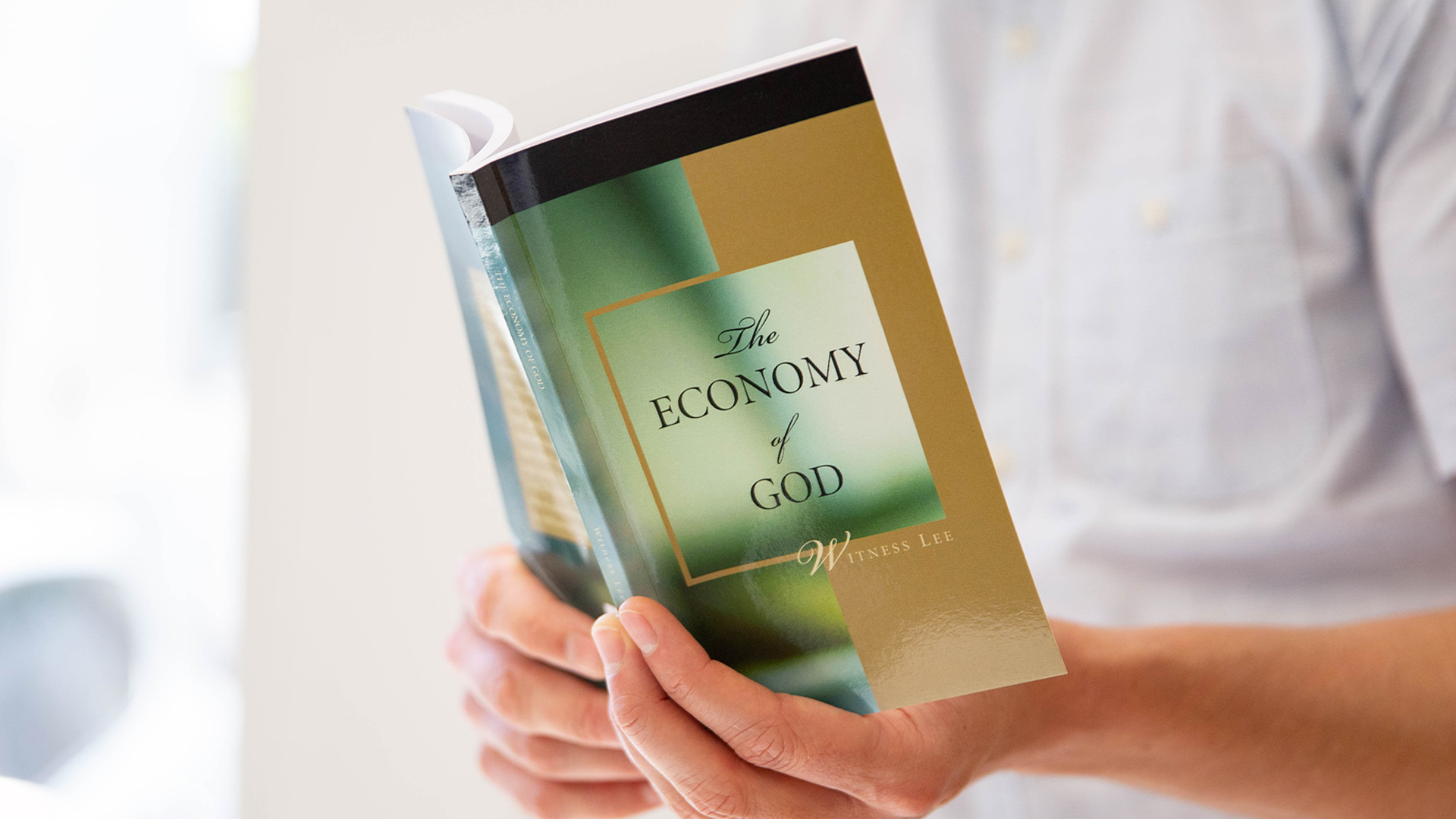
Have you ever heard that God has an economy?
The word economy usually brings to mind things like money, resources, or financial systems. So you might think God’s economy is related to the way God wants believers to handle their money, or how He provides people with material resources.
In the New Testament, the phrase God’s economy is used in a number of verses. But none of them refer to anything material. Instead, this phrase in the Bible points to something much more profound.
In this post, we’ll discuss the usage of the word economy in the New Testament, focusing on a key verse and its accompanying note from the Recovery Version. We’ll also read excerpts from The Economy of God by Witness Lee, a book that examines this tremendous subject in a detailed way.
The Greek word oikonomia
Greek is the original language of the New Testament. The Greek word oikonomia, which is translated into English as economy, appears in several New Testament verses. In 1 Timothy 1:4, the apostle Paul instructed Timothy, his young co-worker in the Lord:
“Nor to give heed to myths and unending genealogies, which produce questionings rather than God’s economy, which is in faith.”
Since this verse states that God’s economy is in faith, and given the context of the entire book of 1 Timothy, we can clearly see that Paul wasn’t speaking of finances or material things.
So what does God’s economy mean?
Let’s read the first section of note 3 on this verse in the New Testament Recovery Version:
“The Greek word means household law, implying distribution (the base of this word is of the same origin as that for pasture in John 10:9, implying a distribution of the pasture to the flock). It denotes a household management, a household administration, a household government, and, derivatively, a dispensation, a plan, or an economy for administration (distribution); hence, it is also a household economy.”
Now that we’ve seen what the word oikonomia means, let’s read the next section of the note to see what God’s economy is:
“God’s economy in faith is His household economy, His household administration (cf. note 101 in Eph. 1; Eph. 3:9), which is to dispense Himself in Christ into His chosen people that He may have a house to express Himself, which house is the church (3:15), the Body of Christ.”
So God’s economy is a plan and administration to dispense not material things, but Himself in Christ into people. These people would then be His house, which is the church, the Body of Christ, for His full expression.
[[Free Study Bible]]
God's divine enterprise
Keeping this note in mind, let’s read some excerpts from The Economy of God by Witness Lee.
In the foreword, Lee explains the title of the book:
“The word economy used in the title of this volume may sound somewhat strange to the reader. The ‘economy of God’ is a quotation from 1 Timothy 1:4, according to the Greek. ‘Economy’ is the Greek word ‘oikonomia’ which primarily signifies the household management, the household administration, arrangement and distribution, or dispensation (of wealth, property, affairs, etc.). It is used with the intention of stressing the focal point of God’s divine enterprise, which is to distribute, or dispense, Himself into man.”
God has a divine enterprise, something He wants to achieve in this universe. The focal point of that enterprise is God distributing, or dispensing, Himself into the human race.
In a previous post about God’s plan, we saw that God had a particular purpose in mind when He created man. He wanted man to receive Him and be filled with Him. By God and man being joined together and sharing His divine life, God would be life and everything to man, and man would express God to the whole universe. This is the divine enterprise of God!
We were made to contain God
How does God’s grand enterprise apply to us? Actually, God’s economy has everything to do with us as a human being and as a believer in Christ.
On page 46 of The Economy of God, Lee says:
“For what purpose did God create man? Only that man might be His container. I like to use this word ‘container’ because it is clearer than the word ‘vessel.’ It is clearly seen in Romans 9:21, 23, and 2 Corinthians 4:7, that God created us to be His containers in order to contain Himself. We are only empty containers, and God intends to be our only content.”
God created us as vessels, or containers, because He wants to be dispensed into us to be our content—in fact, our only content.
To illustrate this point, Lee points out that bottles and light bulbs are both made to contain something particular. Just as a light bulb is designed to contain electricity and nothing else, we were made to contain God.
Lee continues on the same page:
“Man was made purposely to contain God. If we do not contain God and know God as our content, we are a senseless contradiction. Regardless of how much education we may obtain, what kind of position we may have, or how much wealth we may possess, we are still meaningless, since we were purposely made as a container to contain God as our sole content. As containers, we must receive God into our being. Although this word may seem simple, it is the exact word needed to point out the main thought of the whole Scriptures. The basic teaching of the whole Scriptures is simply this: God is the very content, and we are the containers made to receive this content. We must contain God and be filled with God.”
Since we were made specifically to contain God, nothing else truly “fits.” This explains why we felt empty inside before we received the Lord Jesus. Things like a great education, a high-paying job, or endless entertainment can never provide lasting satisfaction. God must be our unique content.
How can we contain God?
God created us specifically with three parts: a body, a soul, and most importantly, a human spirit. Our spirit, the deepest part of our being, has the ability to receive and contain God.
When we repented and believed in Jesus, God dispensed Himself into us for the first time. We received Him and were born of the Spirit in our human spirit. Now from our regenerated spirit, God wants to spread into every part of our being until we’re filled and saturated with Him.
On page 212, Lee explains why our spirit is so crucial in God’s economy:
“Using our spirit as His center, God works Himself out through us. The Triune God is in the center of our being. This is most wonderful! God came into the human nature, brought the human nature into the divine nature, and put an end to all negative things; now the Triune God and all that He has accomplished are in our spirit as our life and everything. From this central point the Triune God spreads out to saturate the inward parts of our being with Himself. The human spirit is the very spot of the mark of God’s economy.”
So our spirit is the starting point. From there, God wants to dispense Himself into our whole being to fill us completely.
Why does God want to fill us? God’s goal in dispensing Himself into us isn’t merely to make us more spiritual or better people. God wants to fill us completely so He can be expressed through us. When every part of our being is filled with God, we will express Him in a full way as the living Body of Christ. This expression is the desire of God’s heart.
We need to see God's economy
Everything God does is with His economy in view. God created us and even redeemed us so He could dispense Himself into us and fill our entire being. This is how He will gain His heart’s desire. If we really see God’s economy, our life will be full of meaning, and our Christian life will be full of purpose.
May the Lord open our eyes to see His wonderful economy!
God’s economy involves many profound matters in the Scriptures, including God’s Person in His Trinity; His creation and redemption; Christ indwelling our spirit; the inward parts of our being, such as our heart, spirit, and soul; and God’s goal, His expression through the Body of Christ.
We could only briefly introduce this tremendous subject in this post. We encourage you to read The Economy of God with its twenty-four eye-opening chapters. Lee lays out the purpose of God as seen in the Bible and provides many practical examples that apply God’s economy to our daily life. You can download the book for free from anywhere in the world.